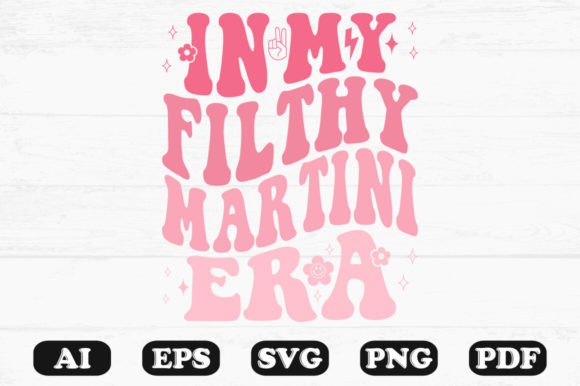
In My Filthy Martini Era Retro Wavy SVG
First Impressions: A Sip of Sass, Not Just a Shape
When I opened In My Filthy Martini Era Retro Wavy SVG, I didn’t just see typography—I felt the vibe. That wavy baseline isn’t decorative fluff; it’s intentional rhythm. The letterforms lean with confident, slightly irreverent swagger—vintage but not dusty, retro but not dated. It reads as playful sophistication, perfect for someone who wears their humor like a well-tailored blazer. As an embroidery designer, my first question is always: *Will this translate cleanly in thread?* The answer, after zooming in and mentally stitching it out, is yes—but with caveats.
Real-Life Test Run: Embroidering a Linen Tote for a Boutique Launch
Last week, I used In My Filthy Martini Era Retro Wavy SVG to embroider a set of heavyweight linen tote bags for a local cocktail-themed boutique. We chose a soft sage background with charcoal thread—minimalist, modern, and mature enough for 30- to 50-year-old customers who appreciate dry wit and craftsmanship. The design scaled beautifully at 4.2” wide across the front panel. No distortion. No lost detail. The gentle wave held its shape through satin-stitched curves and crisp fill-stitched letters. Customers responded immediately—not just to the quote, but to how *intentional* it looked stitched. That matters. In handmade product markets, perceived effort equals perceived value.
Where It Shines (and Where It Needs Guardrails)
In My Filthy Martini Era Retro Wavy SVG excels on stable, medium-weight fabrics: cotton twill aprons, brushed fleece sweatshirts, canvas pillow covers, and structured tea towels. It holds up well in commercial embroidery projects where consistency across dozens of units is non-negotiable. On baby onesies? Proceed with caution—it’s witty, but the “filthy martini” phrasing leans adult. Save it for mom-to-be gifts or nursery decor with irony built in (think: a framed embroidered hoop hung beside a vintage bar cart illustration).
It’s less ideal for:
- Small hoop sizes under 4”: the wave and letter spacing need breathing room;
- Highly textured fabrics like bouclé or thick terry cloth—those subtle curves can blur;
- Thin or stretchy knits without proper cutaway stabilizer—the wavy baseline may ripple unpredictably;
- Dark fabric with light thread unless you add an underlay stitch or backing layer;
- Caps or curved surfaces unless digitized specifically for that application (this SVG is a graphics file—not a pre-digitized embroidery file—so digitization is required).
Design Integrity in Stitch: Clarity, Contrast, and Craftsmanship
What makes In My Filthy Martini Era Retro Wavy SVG work so well for craft business owners is its visual hierarchy. The wave guides the eye smoothly left to right, and the letter weight stays consistent—even at smaller sizes. That means fewer dropped stitches in fine serifs, less risk of thread breaks in tight corners, and better readability on finished products like embroidered patches or custom apparel. For Etsy sellers, that translates directly to fewer returns, more five-star reviews mentioning “crisp stitching,” and stronger brand consistency across listings.
I tested it in both black-on-cream and white-on-navy mockups. On light backgrounds, it pops with personality. On dark, it gains gravitas—especially when paired with matte thread. Avoid overly shiny rayon unless your audience loves high-glam; this design leans toward tactile, grounded charm—not glitter.
Practical Embroidery Designer Notes You Can’t Skip
Before sending In My Filthy Martini Era Retro Wavy SVG to your machine:
- Digitize thoughtfully: Add moderate underlay to anchor the wave; avoid overfilling the counters of letters like “e” or “a.”
- Test on scrap fabric first—especially if using textured or blended fabrics.
- Confirm thread color contrast before stitching a full run. What reads clearly on screen may vanish on oatmeal linen.
- Review stitch density: Too dense = stiff fabric; too sparse = weak definition. Aim for 8–10 stitches/mm in fills.
- Check licensing: This is a Graphics product, not pre-digitized embroidery. If you plan to sell finished embroidered items commercially—or resell the digitized version—you must verify usage rights with the original seller.
- Use appropriate stabilizer: Medium-weight cutaway for knits; tear-away for stable wovens; mesh for lightweight fabrics.
- Mock it up digitally in both light and dark contexts before listing on Etsy or printing packaging.
Why This Design Fits Real Craft Business Needs
This isn’t just another quote SVG. In My Filthy Martini Era Retro Wavy SVG bridges personality and professionalism—a rare balance in the Crafts category. It’s versatile enough for holiday embroidery (imagine it stitched onto a velvet cocktail napkin set), distinctive enough for small shop branding (embroidered on staff aprons), and memorable enough to drive buyer engagement on social media. Customers don’t just buy the phrase—they buy the attitude, the confidence, the handmade presentation.
For creative entrepreneurs building a cohesive line—say, a “Cocktail Hour Collection” of embroidered kitchen towels, linen napkins, and denim jackets—this design anchors the theme without repeating itself. Pair it with simple monogrammed initials or minimalist citrus motifs, and you’ve got a scalable, licensable suite of design assets.
A Final Thought: Let the Vibe Guide the Thread
Good embroidery design doesn’t shout—it resonates. In My Filthy Martini Era Retro Wavy SVG resonates because it understands tone, scale, and context. It’s not for every project, but when it’s right, it feels inevitable. Whether you’re stitching a personalized gift, launching a boutique product line, or building digital embroidery files for sale, let the wave guide your choices—not just in layout, but in intention. Stay sharp. Stay stitch-savvy. And for heaven’s sake—always test on scrap first.